
Feb 23, 2026
The agentic commerce platform: How to actually prepare your catalog for AI-driven discovery
A practical breakdown of how agentic commerce works and the concrete steps brands must take to prepare their catalogs for discovery and conversion inside AI conversations.
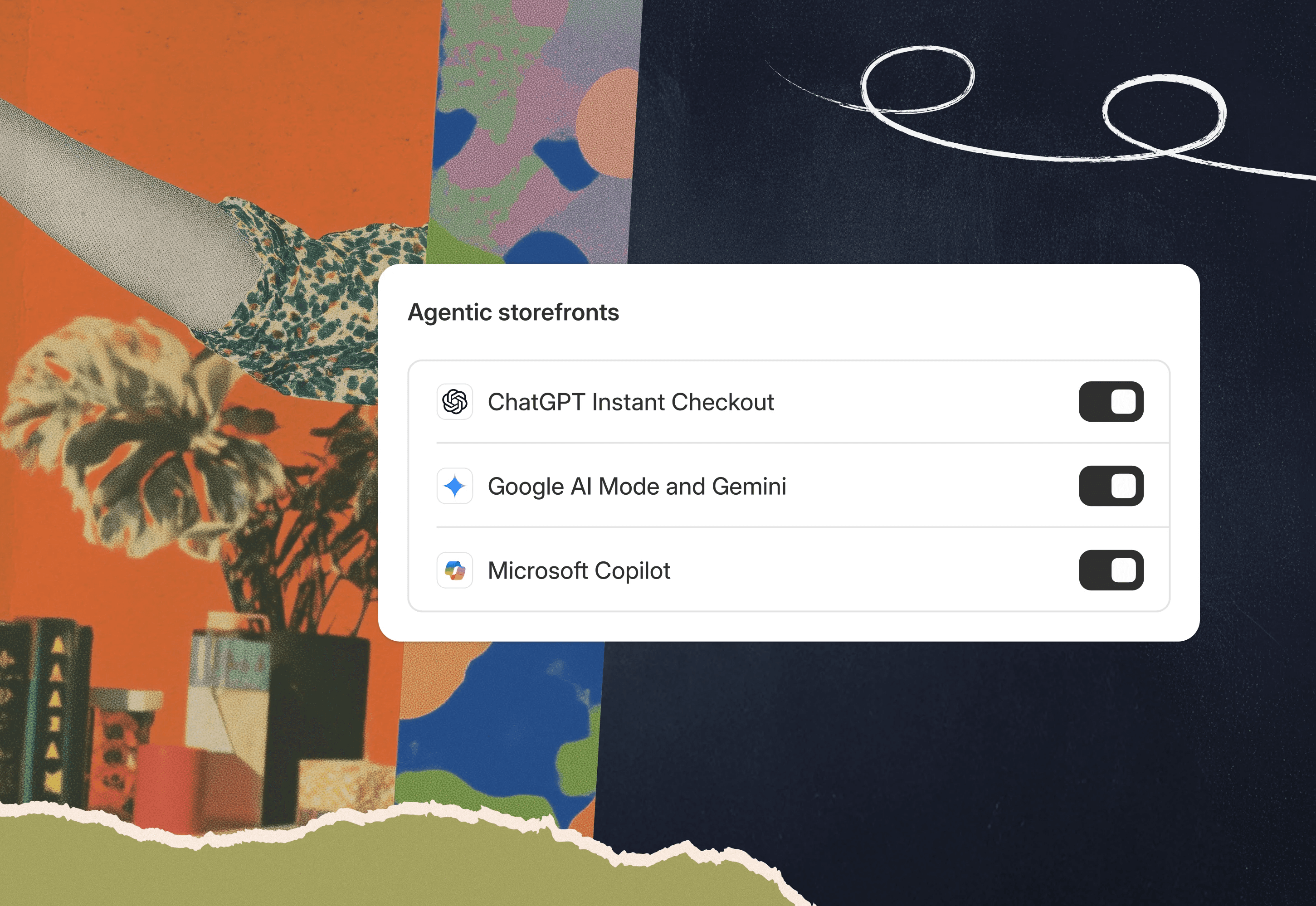
Shopify’s announcement of agentic commerce and the Universal Commerce Protocol is easy to read as a platform shift. What is harder, and more important, is understanding how to show up inside it.
Selling in AI conversations is not about adding another channel. It is about making your catalog legible, credible, and competitive in environments where agents decide what to show before a shopper ever sees a website.
This is what actually matters.
First, what agentic commerce really is
Agentic commerce turns AI conversations into transactional surfaces. A shopper asks a question. An agent evaluates options. Products are compared, explained, and in many cases purchased directly in the conversation using Shopify’s checkout.
Under the hood, Shopify connects merchants to these experiences through Shopify Agentic Storefronts, powered by the Universal Commerce Protocol, co-developed with Google. The same infrastructure supports discovery and checkout across ChatGPT, Microsoft Copilot, Gemini, and future AI surfaces.
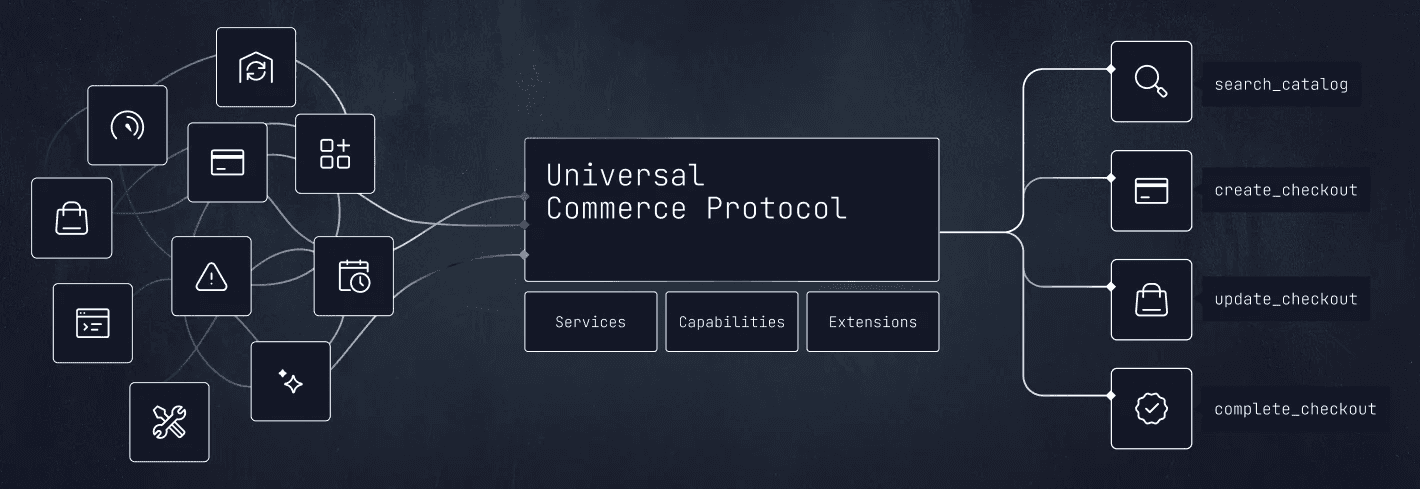
The critical point is this. Agents do not browse. They evaluate.
That changes how products are selected.
Step one: Make your catalog understandable to machines, not just humans
In traditional ecommerce, a product page exists to persuade a human. In agentic commerce, your product data exists to be reasoned over by an AI.
That means structure matters more than copywriting tricks.
Focus on:
Clear product titles that describe what the item is, not just the brand name
Consistent product types and categories that match how people ask questions
Complete variant data including size, format, material, quantity, and use case
Metafields that capture attributes shoppers care about but themes often hide
If an agent cannot confidently answer what your product is, who it is for, and how it differs, it will not surface it.
Step two: Write descriptions for comparison, not conversion
AI agents compare products constantly. Your descriptions should support that behavior.
Effective descriptions:
State primary use clearly in the first sentence
Call out differentiators in plain language
Avoid vague marketing claims that cannot be validated
Include constraints like age range, compatibility, certifications, or exclusions
Think less homepage hero copy and more buyer decision support.
If two products both claim to be “high quality,” the agent has no signal. If one specifies certifications, sourcing, or measurable outcomes, that product wins.
Step three: Metadata is no longer optional
In agentic commerce, metadata is not a backend detail. It is the index.
Shopify’s Catalog uses specialized models to infer attributes, cluster identical products, and surface relevant options. You help that process by being explicit.
Key metadata to prioritize:
Brand policies like returns, shipping times, and subscriptions
Certifications and compliance details
Pricing structure and discounts
Availability and inventory freshness
Agents answer follow-up questions instantly. If the data is missing, the agent will either guess or choose another product.
Step four: Popularity and trust still matter
Agentic discovery is not purely semantic. It is probabilistic.
When multiple products satisfy a request, agents weigh signals of confidence and reliability. While Shopify has not published full ranking logic, the patterns are familiar.
What still matters:
Sales velocity and historical performance
Review volume and sentiment
Brand consistency across channels
Clear, answerable customer questions
If two brands sell the same category of product, the one with stronger trust signals will surface more often. Agents optimize for successful outcomes, not novelty.
This is why emerging brands should think about reviews, customer feedback, and post-purchase experience as discovery inputs, not just retention metrics.
Step five: Discovery is earned, not toggled on
Enabling agentic storefronts does not guarantee visibility.
Agents surface products when they are relevant, confident matches to intent. That intent is shaped by how people phrase questions, the constraints they mention, and the tradeoffs they accept.
To improve discovery:
Align product language with how customers actually ask questions
Use FAQs and knowledge base content to cover objections and edge cases
Monitor which questions lead to impressions and which do not
Iterate your catalog as a living system, not a static upload
This is closer to search optimization than ad placement. Except the evaluator is reasoning, not ranking keywords.

What really matters in the end
Agentic commerce does not reward hacks. It rewards clarity.
The brands that win will not be the ones with the most clever copy. They will be the ones whose products are easiest to understand, easiest to compare, and easiest to trust when an AI is acting on a shopper’s behalf.
This is a structural shift, not a UI change.
Where Nexus Commerce fits
As a Shopify Partner, Nexus Commerce helps brands prepare for agentic commerce by structuring catalogs, metadata, and product narratives so they perform in AI-driven discovery environments.
We work with teams to:
Audit and restructure product data for agent readability
Align descriptions and metadata with real buyer intent
Identify gaps that prevent products from surfacing in agentic recommendations
Continuously optimize as new AI channels and standards evolve
Shopify provides the infrastructure. Nexus Commerce helps brands compete inside it.
If conversations are becoming the new storefront, preparation is no longer optional.